
Romanian article here.
This is an informative text with general educational purposes and does not constitute personalized medical consultation or recommendation. I am not a doctor, but I work as a somatic coach, and the information here does not diagnose or replace a specialist medical evaluation. Before starting any practice, exercise, or use of the devices mentioned, it is important to discuss with your gynecologist (OBGYN) and follow their recommendations.
December 7, 2025
There comes a moment in every woman’s life when it’s important to take inventory of her pelvic health, or pelvic floor health.
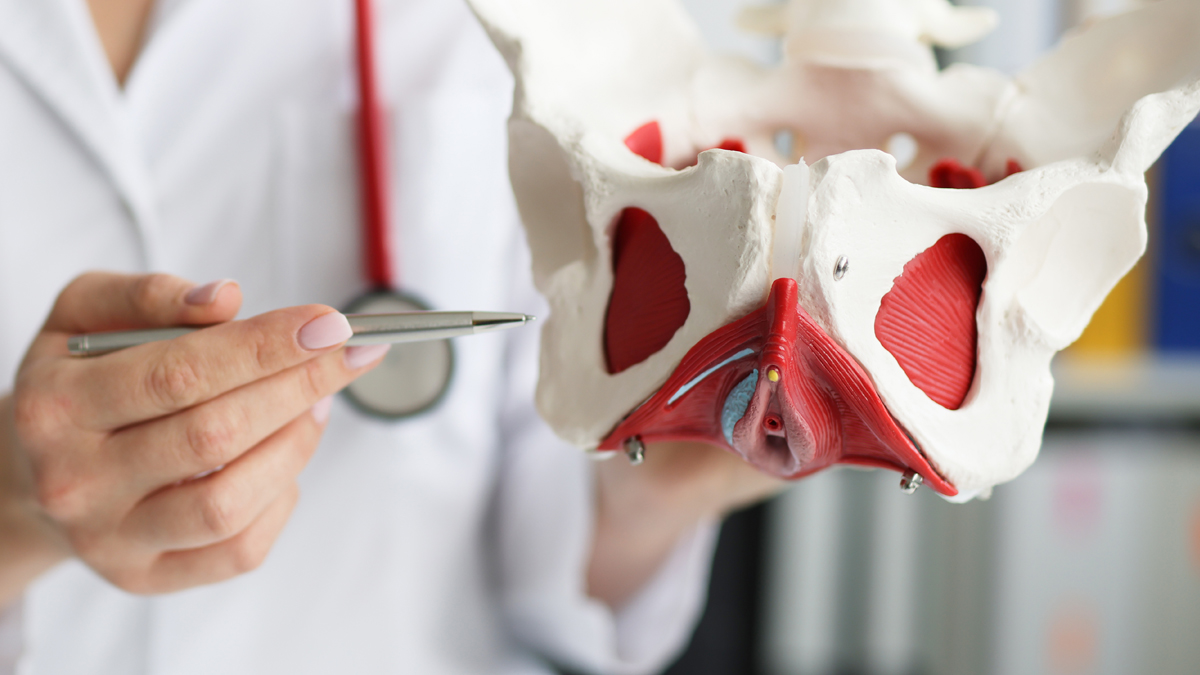
The pelvic floor is a complex set of muscles, ligaments, blood vessels, and nerves that are anchored between the pubic bone and the coccyx. This set of muscles, the pelvic floor, supports the internal organs. Therefore, like any other muscle in the body, it deserves maintenance.
First and foremost, it’s worth asking: “What do I do for the health of my pelvic floor?”
AN OVERVIEW PERSPECTIVE
Below is a list of different actions and accessories, along with the contexts in which they apply.
1. Moderate-intensity movement or sport
Note: High-performance or intensive sport can cause hypertonicity of the pelvic floor; theoretically, a strengthened pelvic floor sounds good, but at least in the case of childbirth, it can lead to complications.
Brisk or power walking, yoga, abdominal and oblique muscle exercises, lower body exercises (legs, glutes – all done gradually), lifting medium weights (ideally under guidance), skipping rope, running, stretching.
Cycling does not directly help strengthen or maintain pelvic musculature, but it doesn’t harm it either.
Jumping jacks (jumps with arms and legs spread apart), done at a lower intensity.
2 Breathwork
When breathing exercises are done slowly and deeply, the pelvic floor moves in tandem with the diaphragm (the breathing muscle). Additionally, controlled intermittent hypoxia training improves tissue oxygenation, thereby implicitly also the muscles in the pelvic floor.
3. Special protocols for the pelvic floor
Here we’re talking about actions that directly and specifically target the pelvic floor. I’ll divide these into two: medical or physiotherapeutic protocols, and general non-medical protocols for people without health issues.
MEDICAL OR PHYSIOTHERAPEUTIC PROTOCOLS
This mostly concerns people with various pelvic floor conditions:
- surgeries
- injuries
- muscle atrophy
- prolapse
- urinary and/or fecal incontinence
- postpartum recovery
In these cases, consult a doctor (gynecologist, urologist, proctologist), and only a doctor can prescribe a special exercise regimen.
Exercises can be prescribed for performance with just the muscles or with medical accessories. Additionally, recovery treatment may include pelvic floor massage.
MEDICAL ACCESSORIES
Vaginal weights/cones/balls
Small weighted devices (cones, balls, “Kegel balls”, barbell-type accessories) are inserted into the vagina to add resistance during contractions. They help strengthen pelvic floor muscles, but as a progression from basic Kegel exercises (just with the muscles).
Biofeedback devices
Devices with a vaginal (or anal) sensor connected to a screen/app that shows how well the muscles contract and relax (pressure gauges, EMG sensors, smartphone-connected devices). They are widely used by pelvic floor specialized physiotherapists and in urogynecology clinics.
Online, they are increasingly sold to the general public as “smart Kegel trainers.”
Electrical stimulation devices
Devices that send mild electrical impulses through a vaginal/anal probe or surface electrodes to trigger pelvic floor contractions. They are frequently used in cases of prolapse or incontinence and are also marketed to the general public as “EMS trainers” for the pelvic floor.
Pessaries and support devices
Silicone or plastic devices are inserted into the vagina to support the pelvic organs. They are prescribed and fitted mainly by gynecologists for prolapse or stress urinary incontinence, often together with exercise programs.
Dilators and internal massage wands
Graduated vaginal (or anal) dilators and internal massage wands are used for painful conditions, vaginismus, post-operative care, or working on scar tissue. They are used in medical or physiotherapeutic contexts.
GENERAL NON-MEDICAL PROTOCOLS
This is the area where I also work, in my role as a somatic coach (my certification can be reviewed here).
In the non-medical category, we’re primarily talking about people with generally good health, without pelvic floor conditions, who seek to maintain muscle tone, prevent atrophy or other issues that may naturally arise near menopause (for women) or with aging (for both men and women). Or they are intended for people who want to explore sexuality (local sensitization, better muscle control).
For the general public, there are Kegel exercises focused solely on the muscles, and then pelvic exercises done with various accessories. Accessory choice differs by objective. But before that, it’s worth noting that even in this case, I recommend seeking a gynecologist’s guidance before exploring any accessories. This is to avoid any subsequent risks that no one wants – in other words, my invitation is to work healthily, without unpleasant complications.
NON-MEDICAL ACCESSORIES
Vaginal weights/cones/balls, if pelvic floor strengthening is sought.
Biofeedback devices for tech enthusiasts and those who want detailed training control.
Electrical stimulation devices, but since we’re in the general public without health issues category, I’d say they’re chosen for comfort (people who don’t want to do the muscle contractions themselves, but let an electrical device do it).
Internal massage wands as tools for body awareness.
Semi-precious stone eggs
These are currently a controversial option. Some doctors warn of potential risks, while others support the practice provided hygiene rules are followed and use is time-limited.
From my side, I confirm they require rigorous hygiene and short use. I’ve used this accessory for 10 years, with no health problems following these rules.
I’ve facilitated this practice since 2019, and no participant has had issues, as we’ve always followed strict hygiene rules.
Additionally, participants were encouraged to see a gynecologist, present details about the practice, and mention the accessory used. I provide all necessary information transparently, and they are invited to obtain the doctor’s approval before participating.
Participation is at one’s own risk, and this practice is complementary and does not replace specialist medical consultation or treatment.
IN CONCLUSION
So, suppose you’re concerned about pelvic floor health, the first step is a doctor’s visit and discussion based on your medical history, tests, and investigations to establish a personalized action plan for you.
If you wish to use my resources, note that in the Patreon community I have a series of audio practices with breathing exercises and simple exercises (no accessories) for the pelvic floor, along with other practices that help with relaxation, calming, detensioning, and motivation, as well as coaching information about intimacy (useful questions before starting an intimate relationship, gift ideas for different occasions in intimate life, suggestions for spending intimate holidays – inspired by American culture, where the 12 days of Christmas are celebrated).
Access is by monthly subscription at $12 + taxes. There’s also a free account follow option, but it has far fewer materials available.
All these resources complement medical care, and I recommend using them with discernment.




Recent comments